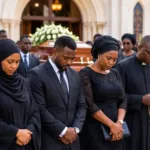
WHAT TO DO WHEN YOU ARE ATTENDING A FUNERAL SERVICE OUTSIDE YOUR FAITH?
Walking into a house of worship that isn’t yours triggers a specific kind of anxiety. You worry about bowing at the wrong time, saying the wrong response, or accidentally committing a breach of etiquette.
A funeral is fundamentally about showing up for the people left behind. As long as your presence is rooted in respect, you have fulfilled your obligation.
Your Presence Beats Participation
You do not need to pray, chant, sing, or recite creeds that contradict your personal convictions.
Silence is a universal language of respect. If the congregation stands, stand with them out of courtesy. If they kneel or bow in prayer, sitting quietly with your hands folded in your lap is acceptable.
What to Expect Across Common Traditions
Every tradition handles grief differently, but a few quick guidelines will keep you grounded anywhere you go.
Jewish Services and Shiva
Jewish services are short, burials are prompt, and caskets remain closed. Wear dark, conservative clothing. If a head covering (a kippah or yarmulke) is provided at the entrance, you may put it on as a sign of respect.
Islamic Services (Janazah)
These involve brief, solemn prayers followed by a quick burial. Dress modestly with covered arms and legs, and women should bring a scarf to cover their heads. Expect to remove your shoes before stepping into their prayer spaces.
Roman Catholic Mass
Expect a structured service with frequent standing, sitting, and kneeling. Stand when the room stands, when communion is served, you should stay in your seat or walk up with your arms crossed over your chest to receive a simple blessing.
Buddhist Services
You will usually see incense altars, portrait displays, and chanting. A slight bow toward the portrait or the family is standard courtesy. Offering incense is optional.
Hindu Services
Expect an open casket. White is the customary color of mourning; avoid wearing black. You are not expected to participate in specific prayers or chants.
In conclusion, when it comes to expressing condolences afterward, do so honestly and simply. You showed up, that is what the family will remember. Find out more about how to plan a multicultural funeral service.