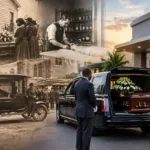
Long ago, families cared for their dead at home. Relatives washed the body, dressed it in the best clothes available, and placed it in the front room. Neighbors came to visit, bringing food along with them.
If a coffin was needed, the local furniture maker built one. Death stayed inside the family house. This was the normal way for hundreds of years.
Everything began to change during the American Civil War in the 1860s. Many young soldiers died far from their homes. Families wanted the bodies sent back. A man named Thomas Holmes found a way to preserve bodies with chemicals so they could travel by train. Soon, embalming became common.
Furniture makers saw a new business. Since they already made coffins, they learned embalming, bought black carriages, and called themselves undertakers. Some kept a special room for the work. In the 1880s and 1890s, the first funeral parlors opened.
In the early 1900s the business grew quickly. Cars replaced horse-drawn carriages. Funeral homes added their own chapels so services no longer needed a church or a private house. Governments started to make rules. Schools taught embalming. What had been a part-time job for carpenters became a full profession with licenses and associations.
The Great Depression and two world wars pushed the change even further. More people moved to cities and small apartments no longer could accommodate a wake and other funeral preparations. Most people began to die in hospitals, and hospitals did not keep bodies for long. Funeral homes offered one place for preparing the body, receiving visitors, and holding the service. Thereafter, convenience became the new custom.
Funeral homes took the hardest work away from the family. It is now so common that few people ask how it began. It began through war, new inventions, people moving to cities, and the simple need to handle death in a convenient way.