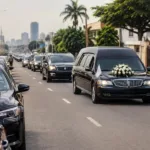
You are driving down a quiet road. Suddenly the cars ahead slow and move to the side. A long line of vehicles appears, headlights on in the middle of the day. Many of them have small flags or signs. This is a funeral procession. Almost without thinking, drivers pull over, stop, and wait until the line has passed.
Why Do People Do This?
Long before cars, people walked or rode slowly behind a cart that carried the deceased person. The journey from the house or church to the burial ground was public. Neighbors stopped what they were doing and stood still or stepped aside as a sign of respect. When cars replaced horses, the same courtesy continued.
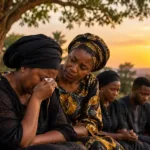
Today the reason is still respect. The people in the procession are taking someone they loved on a final journey. For them the day is heavy with sorrow. When other drivers pull over, it sends a compassionate message.
In certain states and countries, drivers are required to yield to a funeral procession. But even where it is not written in law, most people still stop. The shared understanding is stronger than any law. In many places, it has become part of the way a community behaves when death occurs.
There is a practical side as well. A funeral procession moves more slowly than normal traffic. The cars stay close together so no one gets separated. Sudden stops or aggressive driving around the line can cause accidents. Pulling over keeps the road clear and safer for everyone.
Yet the deepest reason is still human. Death reminds us that life is short and that every person matters. When we stop our cars, we step out of our own busy plans for a short time. We acknowledge that someone has died and that a family is hurting. In a world that often feels rushed and disconnected, this simple act says we still notice one another.